What We Offer
Programs Offered
Government Girls Elementary College of Education, Mirpurkhas (affiliated with the University of Sindh, Jamshoro) offers a range of degree and professional development programs designed to prepare future educators and professionals with the knowledge, skills, and confidence to meet the challenges of modern education.
Degree Programs
B.Ed (Hons.)
Course Overview
Equips future teachers with modern teaching methodologies, strong subject knowledge, and essential 21st-century skills such as critical thinking, creativity, collaboration, and effective communication. The program emphasizes practical classroom experience, reflective teaching practices, and the integration of technology to ensure graduates can create engaging, inclusive, and student-centered learning environments. It prepares educators to confidently meet the evolving needs of today’s diverse classrooms and contribute meaningfully to the education sector.
Duration : 4 Years
ADE (Associate Degree in Education)
Course Overview
DE leading to B.Ed (Hons.) Elementary is a transitional two-year program that focuses on contemporary pedagogical techniques, strong subject-matter knowledge, and the development of effective instructional skills. The program also nurtures teaching communication, creativity, and critical thinking, preparing future educators to meet the needs of modern classrooms with confidence and competence.
Duration:
2 Years
Short & Professional Courses
Early Childhood Care and Education (ECCE)
Course Outline
Duration: 6 Months (24 Weeks)
Sessions: 2 per week | Total Sessions: 48
Session Length: 1.5 hours
Target Group
Teachers Aspiring to become ECE educators
COURSE LEARNING OBJECTVES:
- Understand the basic principles and guidelines of ECCE (Early Childhood Care and Education)
- Recognize the importance of ECCE for academic and holistic development of young children
- Fostering higher order learning skills in early year students to enhance their confidence levels and overall growth
- Develop and implement creative lesson plans with PBL activities and differentiated instructions to support the diverse learning needs of young children
- Identify the developmental milestones for early year children to effectively monitor their overall growth and learning progress
- Develop support strategies to meet the needs of early year students who require special learning support
- Comprehend the significance of health, hygiene, and nutrition for the positive development of early year children
- Engage families and communities to improve early years teaching and learning
- Develop teaching practice skills through classroom observations with an early years class environment
- Application of professional development strategies, corporative learning and reflective practices for sustainable development of ECE practices in Pakistan
COURSE LEARNING OUTCOMES:
- Participants will be able to apply the basic principles and guidelines of ECCE (Early Childhood Care and Education) in real life situations
- Participants will analyze and critically assess the importance of ECCE for academic and holistic development of young children
- Participants will be able to implement higher order learning skills in early year students to enhance their confidence levels, creativity and overall growth
- Participants will be able to create and deliver creative lesson plans with PBL activities and differentiated instructions to support the diverse learning needs of young children
- Participants will assess and evaluate the developmental milestones for early year children to effectively monitor their overall growth and learning progress
- Participants will apply support strategies to meet the needs of early year students who require special learning support
- Participants will analyze and evaluate the significance of health, hygiene, and nutrition for the positive development of early year children
- Participants will apply collaboration approaches to engage families and communities to improve early years teaching and learning
- Participants will apply reflective practices for enhancing teaching practices via observational analysis within ECCE classrooms
- Participants will apply and reflect on professional development strategies and corporative learning for sustainable development of ECE practices in Pakistan
MODULE STRUCTURE:
| Module | Title | Duration | No. of Sessions |
|---|---|---|---|
| 1 | Foundation & Framework of ECCE | 1 Month | 8 |
| 2 | Child Development and Learning (Early Years) | 1 Month | 8 |
| 3 | Teaching Methodologies for ECE | 1 Month | 8 |
| 4 | Health, Nutrition and Safe Learning Environments | 1 Month | 8 |
| 5 | ECCE & Community Engagement | 1 Month | 8 |
| 6 | Classroom Management and Teaching Practice in ECCE | 1 Month | 8 |
Module 1 Topics:
- ECCE concepts and importance in the 21st Century
- National Curriculum ECCE 2022
- Child rights and protection
- Role of ECCE educator & ECCE Learning Areas
- Professional Ethics and standards
- Theories of Development Domains in ECCE
Module 2 Topics:
- ECCE Physical, cognitive, social, emotional development
- ECCE Brain development
- Attachment and emotional security for ECCE
- ECCE Milestones
- Early intervention for ECCE Support
- Identifying Developmental Delays in Early Childhood Care and Education (ECCE)
- Remedies for ECCE Developmental Delays
- Inclusive Education for ECCE
Module 3 Topics:
- Play-based & Project Based learning
- Language & numeracy strategies
- Learning Disorders in ECCE with Remedies/Interventions
- Phonics (English & Urdu)
- Multiple intelligences
- Montessori & Reggio Emilia
- Teaching Sign Language to Children with Special Needs
Module 4 Topics:
- Health & hygiene
- Nutrition practices
- Diseases in Pakistan within the ECCE Context
- WHO Standards for ECCE
- Safety standards
- Preventive healthcare
- Healthy and Happy Learning Environments
Module 5 Topics:
- Home-school connections
- Parent communication
- Community-based learning
- Effects of Parental Involvement on EY Academic Motivation
- Family and Community Engagement for Sustainable Development
Module 6 Topics:
- Classroom routines
- Behavior guidance
- Assessment & documentation
- Lesson planning Documentation
- Teaching Practice 8 sessions (English & Math)
- Differentiated Instructions
- ECCE Learning Models Theory
EVALUATION:
Formative & Summative Assessments
- Class participation
- Quiz/Class Test
- Reflective Journal
- Presentations
- Group Activities
- Research Assignment
- Written Assessment at the end of each module
Canva – An introduction to Digital learning
Course Overview
This course introduces learners to Canva, a powerful digital design tool, and its applications in creating engaging digital learning content. Participants will learn to design presentations, infographics, worksheets, and other educational materials to enhance online and offline learning experiences.
1. Introduction to Canva
- What is Canva
- Overview of features and interface
- Setting up an account
- Navigating the Canva dashboard
2. Basics of Design
- Understanding design principles (color, typography, layout)
- Choosing and customizing templates
- Using Canva elements: images, icons, shapes
3. Creating Learning Materials
- Designing presentations for teaching
- Creating infographics for learning
- Making worksheets and assignments
4. Multimedia Integration
- Adding videos and audio to designs
- Using animations and transitions
- Embedding interactive elements for digital learning
5. Collaboration and Sharing
- Sharing designs with students or colleagues
- Collaborating on team projects
- Downloading and exporting designs in multiple formats
6. Practical Assignments
- Create a presentation on a chosen topic
- Design an infographic or worksheet
- Peer review and feedback session
7.Tips, Tricks, and Best Practices
- Time-saving features
- Using brand kits and templates for consistency
- Common design mistakes to avoid
Learning Outcomes:
By the end of this course, learners will be able to:
- Navigate Canva confidently and use both basic and advanced features
- Design engaging digital learning materials
- Integrate multimedia elements effectively
- Collaborate and share educational content efficiently
Artificial Intelligence: Foundations, Tools, and Applications
Course Overview
This course introduces learners to the core concepts, tools, and real-world applications of
Artificial Intelligence (AI). It focuses on conceptual understanding, ethical awareness, and
practical use of AI tools, enabling learners to apply AI confidently in education, research,
business, and everyday professional tasks.
Total Duration: 36 Hours
Session Length: 1.5 Hours
Total Sessions: 24
Level: Beginner to Intermediate
Course Objectives
Students will be able to:
- Explain core AI concepts and historical evolution
- Identify major AI technologies and applications
- Use AI tools for content creation, research, and analysis
- Analyze ethical and societal impacts of AI
- Evaluate AI-generated outputs critically
- Design basic AI-supported solutions for real-world problems
Learning Outcomes
Students will be able to:
- Explain core AI concepts and historical evolution
- Identify major AI technologies and applications
- Use AI tools for content creation, research, and analysis
- Analyze ethical and societal impacts of AI
- Evaluate AI-generated outputs critically
- Design basic AI-supported solutions for real-world problems
Course
MODULE 1: Introduction to Artificial Intelligence(Sessions 1–3)
- Session 1: What is Artificial Intelligence?
- Session 2: History and Evolution of AI
- Session 3: AI vs Machine Learning vs Deep Learning
MODULE 2: Foundations of AI Technologies (Sessions 4–7)
- Session 4: Data – The Fuel of AI
- Session 5: Basics of Machine Learning (No Coding)
- Session 6: Neural Networks & Deep Learning (Conceptual)
- Session 7: Natural Language Processing (NLP)
MODULE 3: AI Tools for Productivity & Learning (Sessions 8–11)
- Session 8: Generative AI Toolse in schools
- Session 9: AI for Writing & Research
- Session 10: AI for Data Analysis (Conceptual)
- Session 11: AI for Presentations & Design
MODULE 4: AI in Education, Business & Society (Sessions 12–15)
- Session 12: AI in Education
- Session 13: AI in Business & Industry
- Session 14: AI in Healthcare, Law & Governance
- Session 15: Social Impact of AI
MODULE 5: Ethics, Bias & Responsible AI (Sessions 16–18)
- Session 16: Ethics of Artificial Intelligence
- Session 17: Bias, Fairness & Transparency
- Session 18: Responsible Use of AI.
MODULE 6: Practical AI Skills (Sessions 19–22
- Session 19: Prompt Engineering for Beginners
- Session 20: AI Workflow Design (No Coding)
- Session 21: AI for Research & Academic Integrity
- Session 22: Mini Project Development
MODULE 7: Capstone & Future of AI (Sessions 23–24)
- Session 23: Student Presentations
- Session 24: Future Trends & Course Wrap-up
Final Assessment:
Teaching Methodology
- Interactive lectures
- Hands-on AI tool usage
- Case studies
- Group discussions
- Reflective learning
Artificial Intelligence
Course Highlights
This course introduces learners to the core concepts, tools, and real-world applications of
Artificial Intelligence (AI). It focuses on conceptual understanding, ethical awareness, and
practical use of AI tools, enabling learners to apply AI confidently in education, research,
business, and everyday professional tasks.
Total Duration: 36 Hours Session Length: 1.5 Hours
Total Sessions: 24 Level: Beginner to Intermediate
Course Objectives
- By the end of the course, learners will be able to:
1. Understand fundamental concepts and terminology of AI
2. Differentiate between AI, Machine Learning, and Deep Learning
3. Use AI tools for productivity, research, and analysis
4. Evaluate ethical, social, and educational implications of AI
5. Apply AI in education, research writing, data analysis, and decision-making
6. Design simple AI-assisted workflows without coding
Learning Outcomes (Aligned with Bloom’s Taxonomy)
Students will be able to:
- Explain core AI concepts and historical evolution
- Identify major AI technologies and applications
- Use AI tools for content creation, research, and analysis
- Analyze ethical and societal impacts of AI
- Evaluate AI-generated outputs critically
- Design basic AI-supported solutions for real-world problems
3. AI Technologies and Tools
- Machine learning basics
- Natural Language Processing (NLP)
- Computer vision and robotics
4. Applications of AI
- AI in healthcare, education, finance, transportation
- Virtual assistants, chatbots, recommendation systems
- Automation and decision-making
5. AI Ethics and Challenges
- Ethical considerations
- Bias, fairness, and privacy concerns
- Future challenges and limitations
6. Practical Assignments
- Identify AI applications in daily life
- Hands-on exercises with AI tools (optional)
- Case study discussions
7.Future of AI
- Emerging trends
- Careers in AI and machine learning
- Preparing for an AI-driven world
Learning Outcomes:
By the end of this course, participants will be able to:
- Understand AI fundamentals and evolution
- Identify types of AI and their applications
- Recognize AI technologies and real-world use cases
Functional English Communication Program
Course Highlights
A comprehensive course designed to improve reading, writing, speaking, and listening skills. Ideal for students, professionals, and anyone aiming to gain fluency and confidence in English.
Duration: 6 Months (24 Weeks)
Sessions: 2 per week | Total Sessions: 48
Session Length: 1.5 hours
Target Group
Learners of any age group
COURSE LEARNING OBJECTIVES:
- Build confidence in speaking English for every day, social, and professional interactions
- Use practical English effectively in real-life situations
- Communicate thoughts, feelings, and experiences clearly and confidently
- Present short motivational and self-reflective conversations
- Enhance pronunciation, fluency, and non-verbal communication skills
COURSE LEARNING OUTCOMES:
- Speak English confidently and accurately in everyday situations
- Take part actively in discussions, role-plays, and presentations
- Present short motivational speeches clearly and confidently
- Use English effectively at work, in the community, and in public settings
- Show improved self-esteem and independent communication skills
Module Structure
| Module | Title | Duration | No. of Sessions |
|---|---|---|---|
| Module 1 | Foundations of Confident Communication | 1 Month | 8 |
| Module 2 | Everyday Communication & Self Reflection | 1 Month | 8 |
| Module 3 | Functional & Situational English | 1 Month | 8 |
| Module 4 | Motivational & Interactive Speaking | 1 Month | 8 |
| Module 5 | English for Professional Settings and Leadership Skills | 1 Month | 8 |
| Module 6 | Public Speaking & Presentation Skills | 1 Month | 8 |
Module 1 Topics:
- Developing self-confidence, motivation, and a positive mindset
- Professional greetings and effective self-introductions
- Fundamentals of pronunciation
- Constructing grammatically sound and meaningful sentences
Module 2 Topics:
- Family life, home environment, and daily routines
- Preferences, interests, and dislikes
- Personal values, appreciation, and gratitude
Module 3 Topics:
- Public Interaction and Performance Skills
- Expressing Opinions and Decision-Making
- Building Communicative Confidence in Practical Settings
- Confident Communication in Everyday Contexts
Module 4 Topics:
- Emotional Expression and Resilience
- Opinion Sharing and Critical Dialogue
- Leadership Communication and Problem Solving
- Storytelling for Motivation and Influence
Module 5 Topics:
- Professional Communication and Workplace Interaction
- Workplace Attitudes, Ethics, and Leadership Development
- Career Preparation and Skills Enhancement
- Practical Application and Experiential Learning
Module 6 Topics:
- Cultivating Speaking Skills
- Planning and Structuring Speeches
- Practice and Peer Learning
- Final Performance
Formative Assessment during Sessions:
- Final speech
- Delivery & body language
- Overall growth
FINAL GRADING DISTRIBUTION
Component | Weight |
Module 1 | 10% |
Module 2 | 15% |
Module 3 | 15% |
Module 4 | 15% |
Module 5 | 20% |
Module 6 | 25% |
Total | 100% |
SEMESTER-WISE SUBJECTS
ADE / B.Ed (Hons) – Course Structure
ADE / B.Ed (Hons) – Part I, 1st Semester
| Sr. | Subject |
|---|---|
| 1 | Functional English-I (Compulsory) |
| 2 | Islamic Studies (Compulsory) |
| 3 | Urdu / Regional Languages (Content) |
| 4 | Child Development (Foundation) |
| 5 | General Science (Content) |
| 6 | General Method Of Teaching (Foundation) |
ADE / B.Ed (Hons) – Part I, 2nd Semester
| Sr. | Subject |
|---|---|
| 1 | English-II (Communication Skills) (Compulsory) |
| 2 | Computer Literacy (Compulsory) |
| 3 | General Mathematics (Content) |
| 4 | Classroom Management (Foundation) |
| 5 | Pakistan Studies (Compulsory) |
| 6 | General Method of Teaching (Foundation) |
ADE / B.Ed (Hons) – Part II, 1st Semester
| Sr. | Subject |
|---|---|
| 1 | Teaching Literacy Skills (Professional) |
| 2 | Arts, Craft & Calligraphy (Content) |
| 3 | Teaching of General Science (Professional) |
| 4 | Teaching of Urdu / Regional Languages (Content) |
| 5 | Instructional & Communication Technology (ICT) in Education (Professional) |
| 6 | Teaching Practice (Short Term) |
ADE / B.Ed (Hons) – Part II, 2nd Semester
| Sr. | Subject |
|---|---|
| 1 | Teaching of English-II (Foundation) |
| 2 | School, Community & Teacher (Foundation) |
| 3 | Teaching of Mathematics (Professional) |
| 4 | Classroom Assessment (Professional) |
| 5 | Teaching Social Studies (Professional) |
| 6 | Teaching Practice (Short Term) |
B.Ed (Hons) – Part III, 1st Semester
| Sr. | Subject |
|---|---|
| 1 | Educational Psychology |
| 2 | Foundation of Education |
| 3 | Curriculum Development |
| 4 | English-III (Technical Writing & Presentation Skills) |
| 5 | Foundation of Reading (Content-I, Reading) |
| 6 | Chemistry (Content-II, Science) |
B.Ed (Hons) – Part III, 2nd Semester
| Sr. | Subject |
|---|---|
| 1 | Contemporary Issues & Trends in Education |
| 2 | Reading Difficulties (Content-I, Reading) |
| 3 | Comparative Education |
| 4 | Introduction to Guidance & Counseling |
| 5 | Physics (Content-II, Science) |
B.Ed (Hons) – Part IV, 1st Semester
| Sr. | Subject |
|---|---|
| 1 | Research Methods in Education |
| 2 | Teaching of Reading (Content-I, Reading) |
| 3 | Reading Assessment (Content-I, Reading) |
| 4 | Teaching Science Pedagogy (Content-II, Science) |
| 5 | Biology (Content-II, Science) |
| 6 | Teaching Practice (Reading Practicum) |
B.Ed (Hons) – Part IV, 2nd Semester
| Sr. | Subject |
|---|---|
| 1 | Research Project |
| 2 | School Management |
| 3 | Advanced Practicum (Long Term) – 6 Credit Hours |
| 4 | Test Development & Evaluation |
| Courses | ADE | B.Ed. (Hons.) |
|---|---|---|
| Compulsory Courses | 16 | 19 |
| Professional Courses | 21 | 51 |
| Foundation Courses | 15 | 24 |
| Content Courses | 9 | 26 |
| Teaching Practice | 6 | 15 |
| Total Credit Hours | 67 | 135 |
Key Team Members
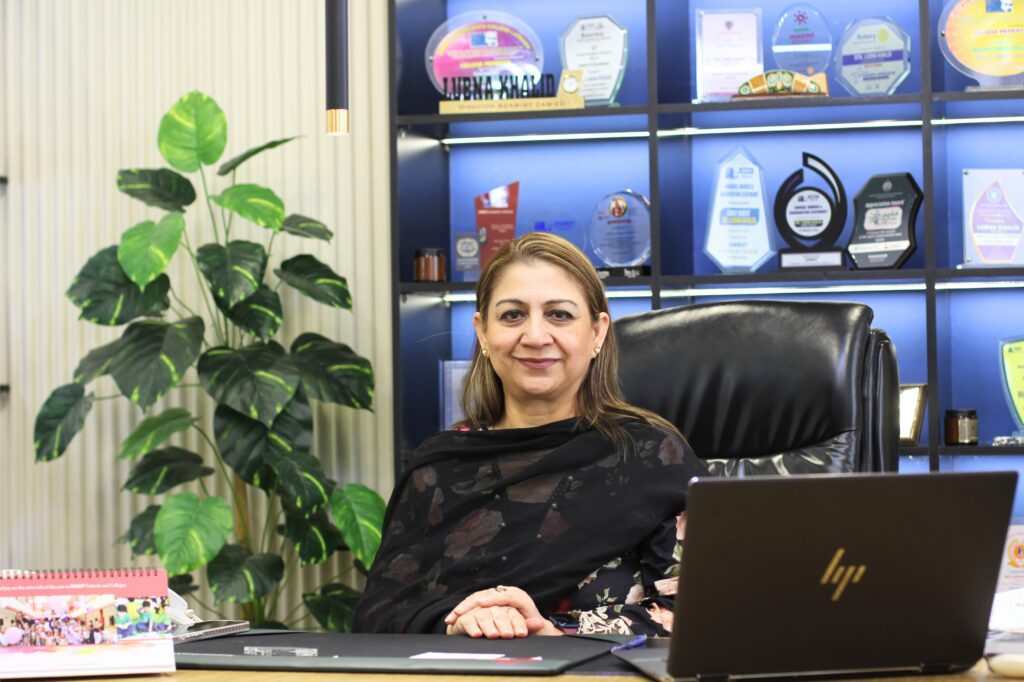
Dr. Lubna Khalid
Education Expert, Project Specialist, Executive Director of SZABIST ZAB-ed
Doctorate in Education
Master in Education
Bachelors of Science
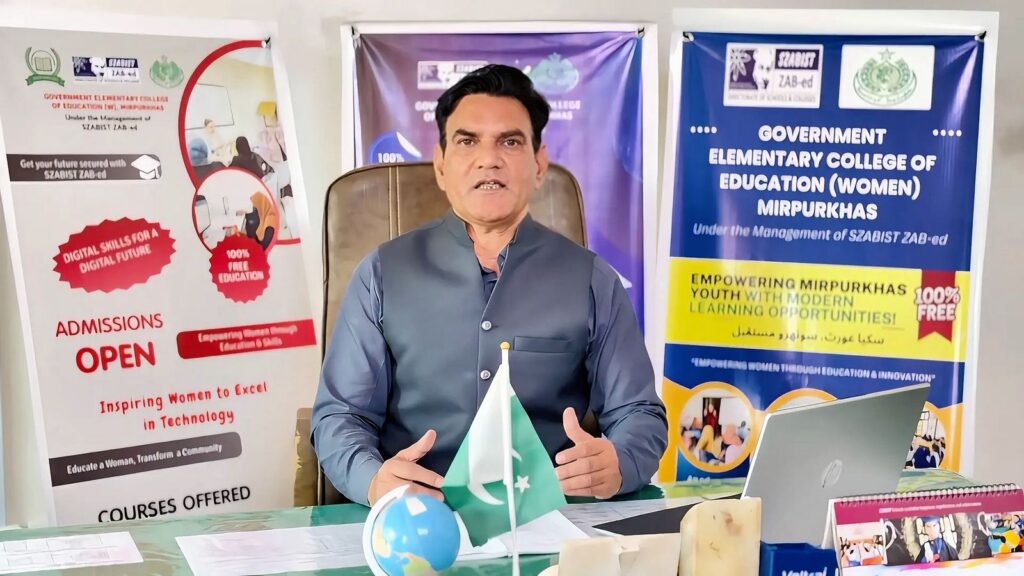
Mr. Muhammad Waseem
Principal-GECE(W), Mirpurkhas
Master of Arts (M.A) in English
Master of Arts (M.A) in Urdu
Master of Education M.Ed.

Mr. Zeeshan Ahmed
Associate Professor - GECE(W), Mirpurkhas
Master of Arts (M.A) in Mathematics
Master of Education M.Ed.

Rabia Shoukat
Computer & other B.ed Related subjects -Teacher
Master of Arts (M.A) in English
Bachelors in Computer Science
Bachelors in Education (B.Ed)
Osama Bin Saleem
Science & other B.ed Related subjects Teacher
Master of Arts (M.A) in Urdu
Bachelors in Education (B.Ed)
Michell Margarete
English & other B.ed Related subjects Teacher
Bachelors in Education (B.Ed)

Bushra kanwal
Primary School Teacher
Bachelors in Education (B.Ed)
Bachelors in Business Administration
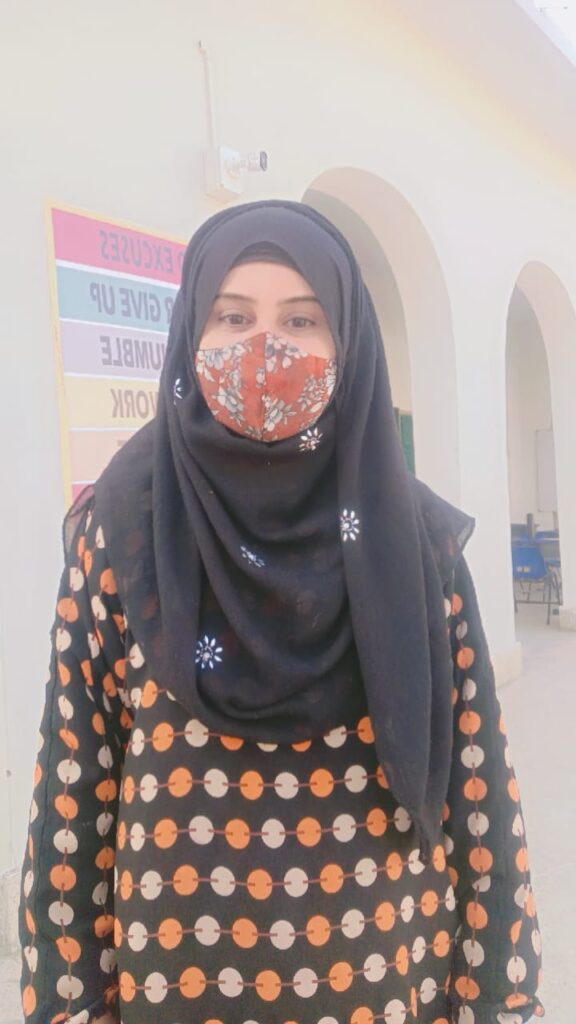
Saima Shafi
Primary School Teacher
Bachelors in Education (B.Ed)
Bachelors in Science
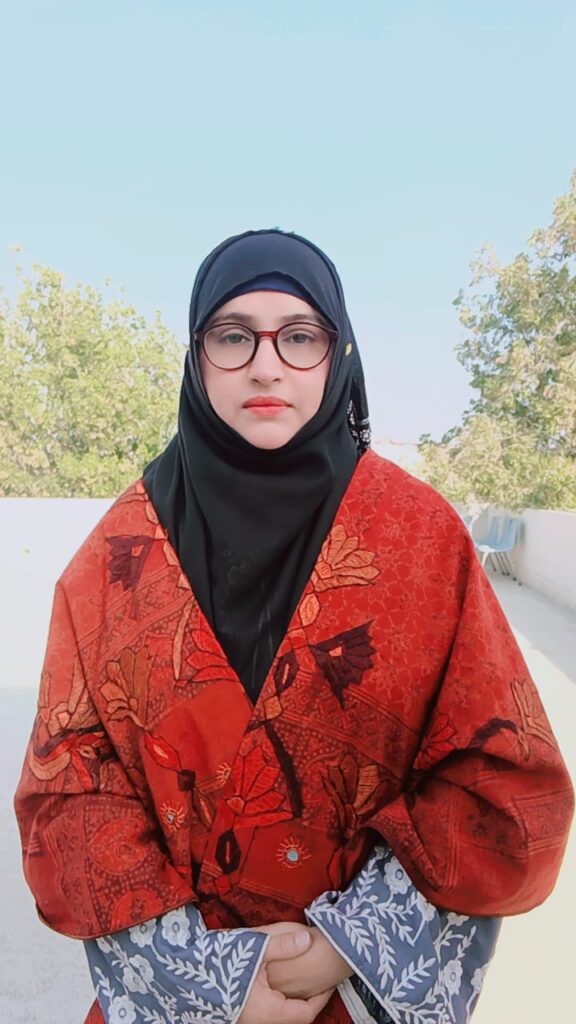
Shahzeen Azhar
Primary School Teacher
Bachelors in Education (B.Ed)
Bachelors in Science (Chemistry)
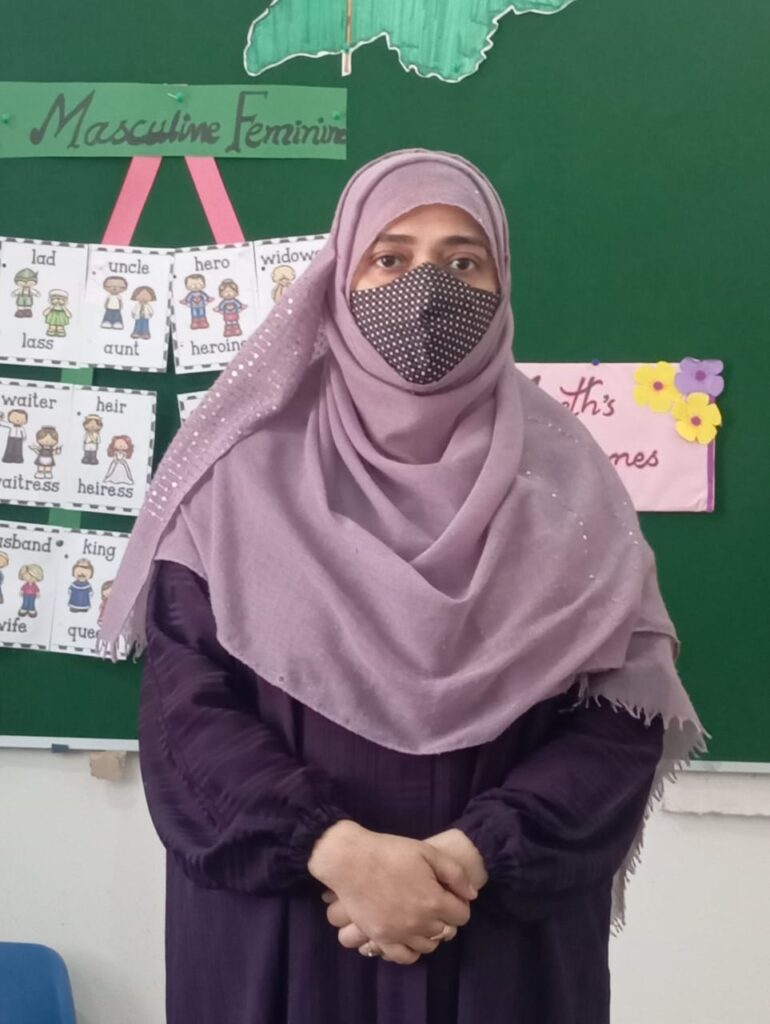
Nadia Ansari
Primary School Teacher
Bachelors in Education (B.Ed)
M.Sc. (Zoology)
Miss Farzana
Primary School Teacher
Bachelors in Education (B.Ed)
BSC (Bachelor of Science)
Course Spotlight
Get an inside look at how future educators are being prepared for tomorrow’s classrooms.
Course Title : Art , Craft & Calligraphy
Course Title : Literacy Skills
Course Title :General Science
Administration
The Office of the Administration at Government Girls Elementary College of Education, Mirpurkhas is dedicated to serving students, faculty, staff, and the wider college community. It acts as the central hub for academic and administrative services and should be your first point of contact for guidance related to academic matters or student support.
The office works to uphold and implement academic policies, maintain student records, and ensure smooth academic operations. It also assists in the development and improvement of institutional procedures to better serve the college community.
Our Support & Services
- Personalized support for admissions, courses, and academic planning.
- Monitor and manage your attendance conveniently online.
- Access and track your academic results anytime, anywhere.
- Assistance in understanding requirements and staying on track
- Resources and support for skill-building and short courses.
- Extra Ordinary safe & secure environment
- Practicing School for hands on Training
- Global Exposure & Access to Renowned Educationists
- Smart Classrooms with Interactive Boards
- Access to Teaching Licenses & Professional Pathways
- Uninterrupted Power & High-Speed Internet
- Talent Clubs for Every Passion
- Indoor & Outdoor Activity Zones
- Continuous Professional Development
Practice School
The college has an attached practice school affiliated with the Government Elementary College of Education (Women), Mirpurkhas. It provides quality education to students from Classes I to V. This school serves as a training ground for ADE and B.Ed. (Honors) student-teachers, allowing them to conduct teaching practice and gain valuable hands-on classroom experience as part of their professional preparation.
Facilities
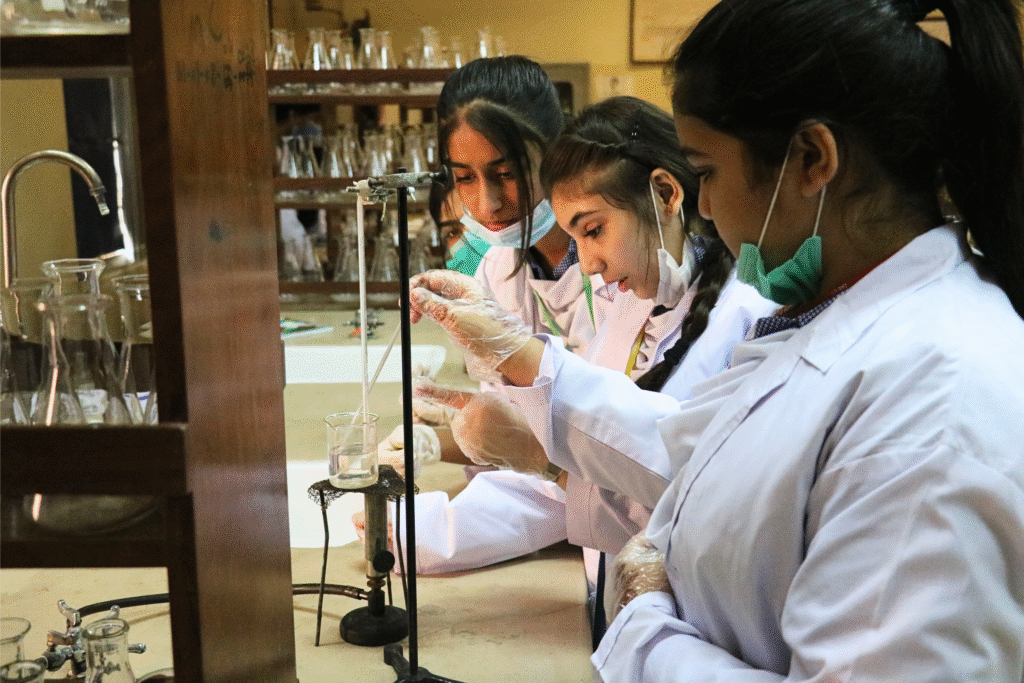
Science Laboratory
Experiments and practical work are the foundation of discovery and innovation. To encourage scientific learning and exploration, the college maintains a well-equipped Science Laboratory with all the necessary instruments and materials. It provides students with hands-on experience to connect theoretical knowledge with real-world applications.
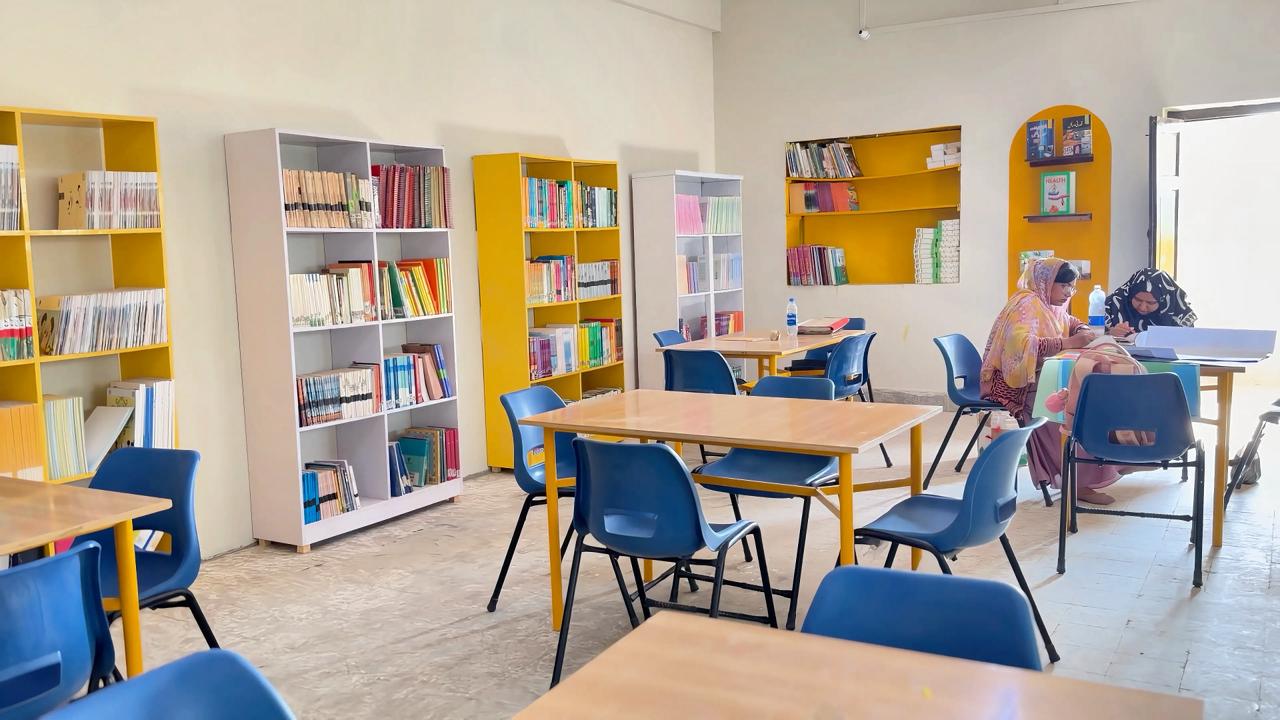
Library
The college has a well-furnished library equipped with a rich collection of over 1,000 books, including reference materials, subject-specific texts, and periodicals. The library provides a quiet and resourceful environment to support both students and teachers in intensive and extensive reading, research, and academic assignments.
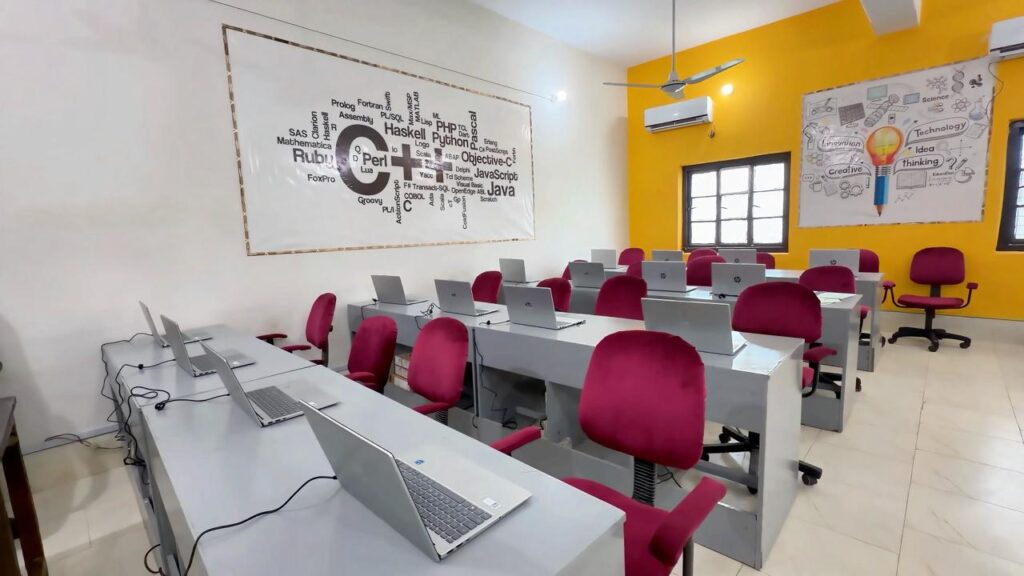
Computer Laboratory
Recognizing the importance of information technology in modern education, the college has established a Computer Laboratory to enhance digital literacy among ADE and B.Ed. (Honors) students. The lab provides trainees with practical experience in using computers and the internet, enabling them to effectively complete academic tasks, research, and classroom activities through technology.
Co-Curricular Activites
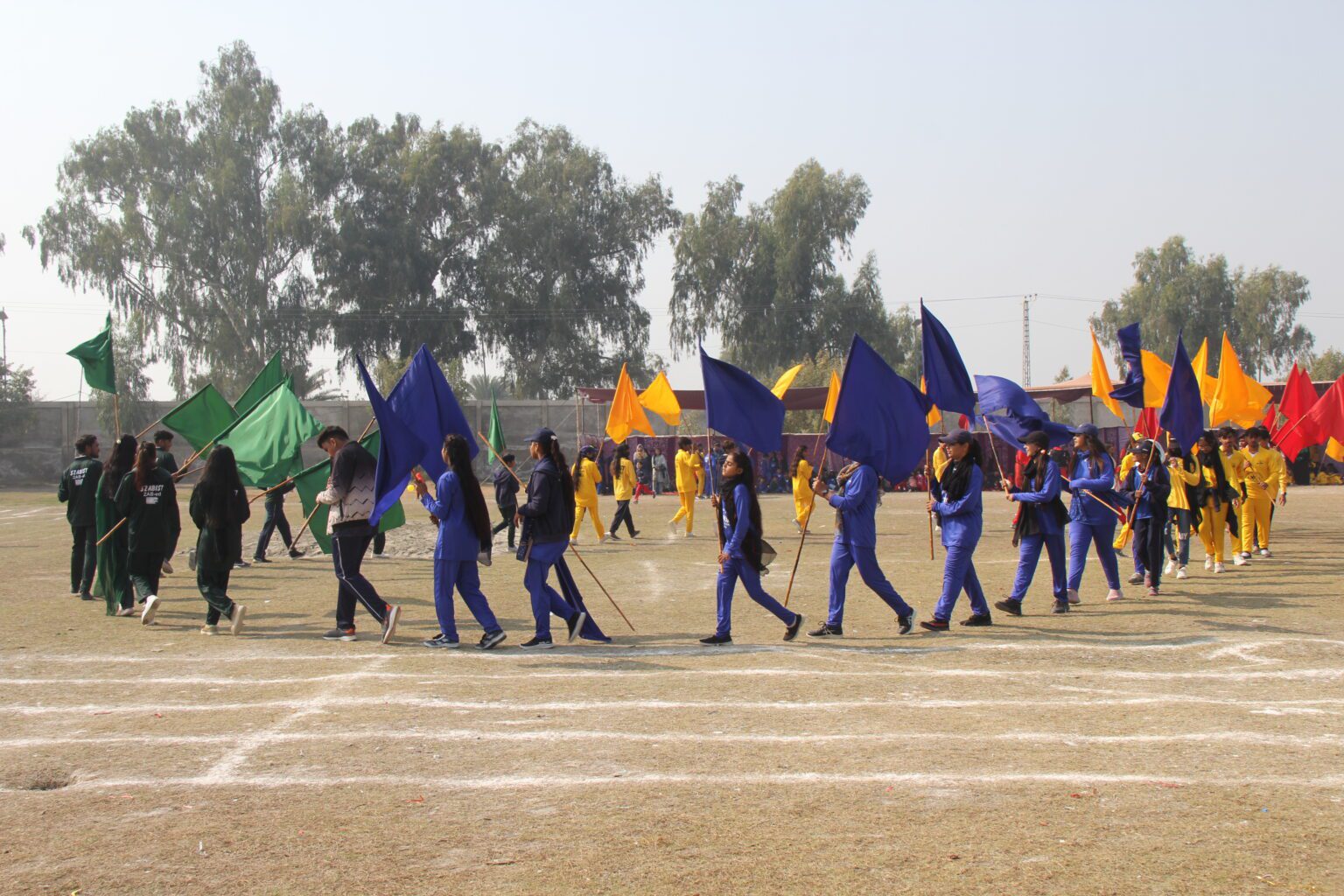
Co-curricular activities are an essential part of education, contributing to the holistic development of students and complementing classroom learning. They provide opportunities for students to explore their interests, develop confidence, and showcase their talents beyond academics.
The college offers facilities such as a playground and a sports room to promote physical fitness and teamwork. Students actively participate in sports, athletics, debates, dramas, quizzes, music, Qirat, and Naat competitions, enhancing their personal growth and overall performance.